
Why Your Toyota Feels Rough Over Bumps and Which Suspension Parts to Check
A Toyota that suddenly feels harsher over bumps, takes longer to settle after uneven roads or develops a new knock underneath is worth having inspected. Suspension wear often develops gradually, so the driver may become used to the change before it becomes obvious.
A rough ride does not automatically mean the shock absorbers need replacing. Shocks or struts, springs, bushings, control arms and other suspension components work together, while tyres and other vehicle conditions can also influence how the car feels. The useful starting point is therefore the type of symptom, when it occurs and what an inspection finds before any replacement part is ordered.
A Toyota that keeps bouncing needs more than a guess at the shocks
If the vehicle continues moving up and down after travelling over a bump, the suspension is not controlling body movement as smoothly as expected.
Shock absorbers and struts are designed to control suspension movement, so they are among the components worth checking when excessive bouncing develops. However, the symptom alone does not prove that one shock or strut is responsible.
Springs, mounting components and other parts of the suspension can also affect how the vehicle settles. A workshop should inspect the system before deciding which component actually needs attention.
Once the fault has been identified, you can check BIP’s range of Toyota suspension parts in Melbourne for different Toyota models and suspension applications.
A sharp knock over bumps can come from several places
A knock or clunk is one of the easiest suspension symptoms to notice and one of the easiest to oversimplify.
Bushings, control arms, sway bar-related components, mounts and other suspension connections can all be areas worth inspecting when a new noise appears over bumps or uneven surfaces.
The location and timing of the noise can help with diagnosis. For example, a sound that occurs mainly when one wheel travels over a bump may lead an inspection in a different direction from a noise that appears during steering, braking or larger suspension movement.
That does not mean the sound should be diagnosed from the driver’s seat. It means giving the mechanic useful information about when the noise occurs rather than simply asking for the first suspension part that comes to mind.
A harsh ride is different from excessive bouncing
“The car feels rough” can describe several different behaviours.
One vehicle may continue bouncing after a bump. Another may feel unusually sharp or harsh over small road imperfections. A third may feel less controlled through corners or uneven surfaces.
Those differences matter because suspension components perform different jobs.
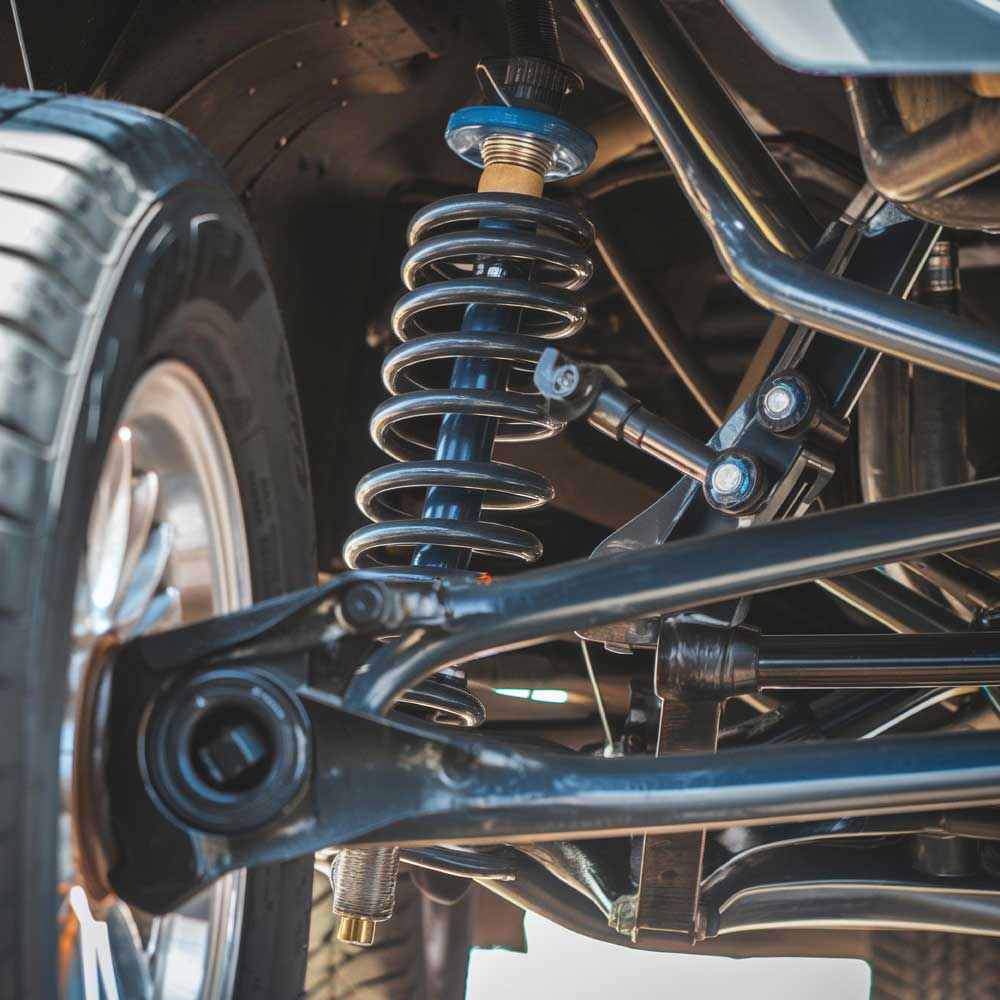
Springs support the vehicle and allow suspension movement. Shock absorbers and struts help control that movement. Bushings cushion and locate moving suspension components. Control arms and associated components help maintain suspension geometry as the wheels move.
Rather than treating every rough ride as the same problem, describe exactly what has changed. When did it begin? Does it happen at the front or rear? Is it worse over small bumps, larger dips or during cornering? Those observations can give the inspection a better starting point.
Changes in ride height deserve investigation
If one corner of the Toyota appears lower than it used to, or the vehicle is sitting differently from side to side, the suspension should be inspected.
Springs are among the components involved in supporting vehicle weight, but visible ride-height changes can have different causes. Loading, previous modifications and the condition of related components should also be considered.
If the Toyota regularly carries tools, equipment or other loads, explain that to the workshop. The way the vehicle is normally used provides important context when assessing suspension behaviour.
A ride-height difference should not be corrected by ordering a spring based purely on appearance. Confirm the cause and exact suspension specification first.
Not every rough ride starts with a failed suspension part
Before replacing suspension components, it is worth confirming that the suspension is actually responsible for the change.
Tyre condition and tyre pressure can influence ride quality. Wheel or tyre damage can also create vibration or harshness that may initially feel like a suspension issue.
This is another reason diagnosis matters. Replacing a shock absorber will not solve a problem caused elsewhere on the vehicle.
If the change followed a pothole impact, accident or other significant event, mention that during the inspection. That information can help determine which areas deserve closer attention.
Bushings can affect noise and how components move
Bushings sit between various suspension components to provide cushioning and allow controlled movement. As they deteriorate or become damaged, the change may present as additional noise, movement or a different feel through the vehicle.
Because multiple bushings can be used across the suspension, hearing a knock does not identify which one is responsible.
An inspection should establish where unwanted movement exists and whether the bushing itself, the component around it or another part of the suspension requires attention.
This is particularly useful before ordering used components. Replacing an entire assembly when only one serviceable item needs attention may not make sense, while replacing only a small component will not help if the larger assembly is damaged.
Control arms and related components should be assessed as part of the system
Control arms help locate the wheel and suspension as it moves. Their associated bushes, joints and mounting points can therefore influence how the vehicle behaves.
If a Toyota has developed unusual movement, knocking or a noticeable change in handling, these areas may be included in the inspection alongside shocks, struts and springs.
Suspension components should not be treated as isolated parts simply because they are sold individually. Wear or damage in one area can change how neighbouring components operate.
For that reason, identifying one worn part should also prompt a sensible check of related suspension components while access is available.
Tyre wear can provide another reason to inspect the suspension
Unusual tyre wear does not automatically prove there is a suspension fault, but it can justify checking the vehicle’s suspension, steering and wheel alignment.
If tyre wear has changed noticeably, particularly alongside new handling behaviour or suspension noise, mention it during the inspection.
A workshop can then determine whether the cause relates to suspension condition, alignment, tyres or another issue.
The important point is not to replace suspension parts simply because a tyre looks uneven. The underlying cause needs to be established first.
Modified Toyotas need additional fitment checks
If the Toyota has been lifted, lowered or fitted with non-standard suspension components, mention those modifications before ordering replacement parts.
The original factory specification may no longer describe what is currently installed on the vehicle.
Take photographs of the existing component and record any visible part numbers or manufacturer markings. If the suspension modification was completed previously, workshop invoices or component documentation can also help identify what is fitted.
This is particularly relevant for Toyota 4WDs that may have suspension modifications for touring, off-road use or carrying additional equipment.
BIP’s article on checking Toyota 4WD components before a longer trip covers suspension alongside drivetrain, braking and other pre-trip checks in more detail.
Used suspension parts need to be assessed individually
Buying a second-hand suspension component should not be treated exactly like buying a used mirror or interior trim piece.
Suspension contributes to how the vehicle moves, handles and responds to the road, so condition and suitability deserve careful assessment.
BIP’s suspension range includes second-hand genuine components for Toyota models, including shock absorbers, shocks and struts, bushings and springs. Its current suspension page states that components are inspected before being offered for sale. However, the suitability of any individual replacement still needs to be considered for the particular vehicle and repair.
The amount of installation labour matters as well. If replacing the component involves considerable workshop time, confirming the correct part and its condition before installation becomes even more important.
You can view available suspension components to suit different Toyota models once the required part has been diagnosed.
Have the exact Toyota details ready before sourcing the part
Toyota suspension parts can vary between models, generations, drivetrains and vehicle specifications.
Before making an enquiry, have the following details ready where possible:
- VIN
- build year
- exact Toyota model and series
- variant where known
- 2WD, 4×2 or 4×4 configuration where relevant
- front or rear position
- left or right position
- existing part number
- photos of the original component
- details of any suspension modifications
Keep the original component available for comparison until the replacement has been confirmed wherever practical.
A part from another vehicle carrying the same Toyota badge may still have different dimensions, mounting points or specifications.
Diagnose the change before replacing suspension components
A rough ride is a reason to investigate the suspension, not a diagnosis by itself.
Repeated bouncing, knocking, harshness, ride-height changes and different handling behaviour can each provide useful clues, but several components may contribute to similar symptoms. Tyres, vehicle loading and modifications can also affect what the driver feels.
Start by describing exactly what has changed and when it happens. Have the suspension inspected, identify the component responsible and then confirm the vehicle specification before buying the replacement.
For steering and suspension repairs that affect vehicle control, appropriate professional assessment and installation are important.
If you have your VIN, part number or photos of the suspension component you need, send us an enquiry.













Leave A Comment