
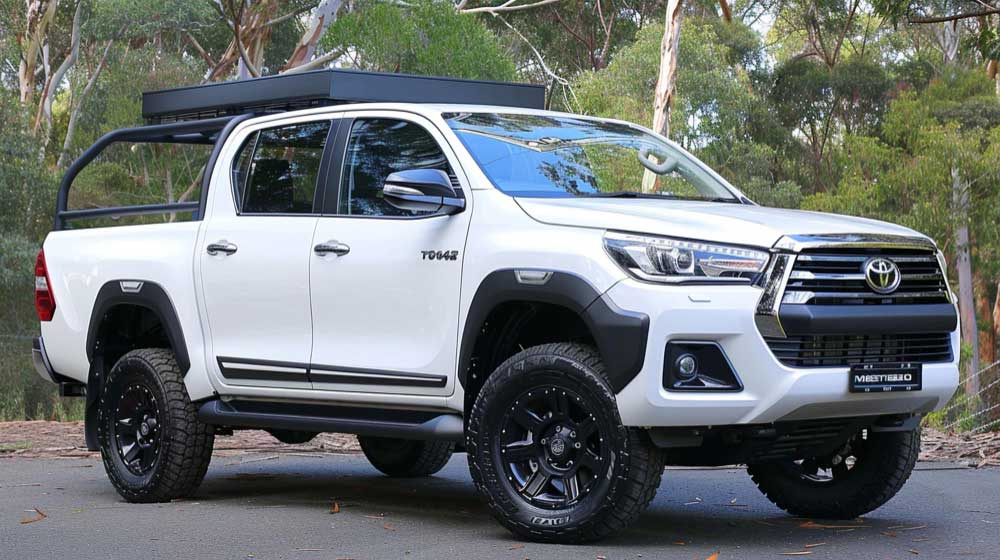
Repairing a Toyota Hilux and Deciding What to Fix First
A Toyota Hilux can need several repairs at the same time, especially after years of regular work, high kilometres, rough-road use or minor accident damage. A suspension knock may appear just as a headlight needs replacing, the tailgate is damaged and something under the bonnet starts demanding attention.
When that happens, the best approach is not to replace the most visible part first. Start with anything that affects safe operation or could lead to a larger mechanical problem, then work through functional repairs before moving on to cosmetic items. If several Hilux car parts are required, planning the complete repair before ordering can also reduce unnecessary workshop visits and downtime.
Start with anything that affects safe operation
Steering, braking, suspension, lighting and important drivetrain problems should generally be assessed before cosmetic damage. A scratched bumper can usually wait. A vehicle that has developed unusual steering behaviour, braking changes or unstable suspension should not simply be added to the “deal with it later” list.
Pay attention to changes such as excessive bouncing, knocking from underneath the vehicle, unusual movement through the steering wheel, braking changes or lights that no longer operate correctly.
These symptoms do not automatically tell you which component has failed, so diagnosis should come before ordering replacement parts. For steering, braking and suspension work in particular, the condition of the complete system should be assessed rather than replacing a component based on noise alone.
Cooling problems should move high on the repair list
An overheating Hilux, unexplained coolant loss or a noticeable change in operating temperature deserves prompt investigation. Cooling problems can involve several components, and continuing to drive without identifying the cause can turn a manageable repair into a much larger job.
Do not assume the radiator is automatically responsible. Hoses, connections and other cooling-system components may also need inspection. The useful first step is finding the actual fault and then identifying the part required.
If replacement components are needed alongside other repairs, you can check BIP’s range of used Toyota Hilux parts for mechanical and body repairs before deciding which jobs can be completed together.
Drivetrain changes should be diagnosed before ordering parts
New vibration, clunking, unusual transmission behaviour or other drivetrain changes should be investigated before assuming a gearbox, differential or another major assembly needs replacement.
Large mechanical components can involve significant installation labour, so correct diagnosis and part identification become especially important. If a used engine, transmission or other major assembly is being considered, confirm that it matches the exact Hilux specification before the repair starts.
The VIN, build year, engine details, transmission and drivetrain configuration can all help with identification. A part coming from another Hilux does not automatically make it suitable for yours.
Electrical problems can quickly become more than an inconvenience
Electrical faults often begin with something relatively minor. A starter becomes inconsistent, a light stops working or the charging system begins behaving differently. Because the Hilux may still be driveable, these problems are easy to postpone.
The better approach is to identify the fault before buying anything. Starter motors, alternators, lights, switches and wiring-related components can vary between Hilux generations and specifications.
For electrical replacement parts, compare the existing component carefully. Part numbers, plugs, mounting points and clear photographs can be useful when checking compatibility.
Body damage can usually be prioritised by function
Not every dent, scratch or damaged panel needs immediate attention. Cosmetic damage can often be scheduled around the repair budget, particularly when it does not interfere with how the vehicle operates.
The priority changes when the damage affects a door, mirror, headlight, tailgate, mounting point or another component used regularly. A damaged tailgate that no longer closes properly, for example, creates a different problem from a superficial dent in the same panel.
Used original body components can be practical for these repairs. Doors, bumpers, panels, bonnets, guards, headlights and interior components may all be worth considering when condition and compatibility are clear.
If several exterior and mechanical items are required, view BIP’s second-hand Hilux parts for different repair needs and identify the complete parts list before the vehicle is dismantled.
Know exactly which Hilux you are repairing
Toyota has produced the Hilux across many generations, engines, transmissions, drivetrains and body configurations. The model name alone is therefore not enough information for every replacement part.
Before ordering, have the following details ready where relevant:
- VIN
- Build year
- Hilux model or series
- Engine type
- Transmission type
- 4×2 or 4×4 configuration
- Existing part number
- Front, rear, left or right position where applicable
- Clear photos of plugs, brackets and mounting points
This becomes particularly important with mechanical and electrical components. Two parts can look nearly identical while using different connectors, mounts or internal specifications.
If you need more detail on compatibility and replacement-part identification, BIP’s guide on choosing the right replacement components for a Toyota Hilux covers that part of the process in more depth.
Decide where used parts make sense for the repair
The choice between new and used does not need to be the same for every component.
A good used door, headlight, tailgate, seat, interior trim piece or panel can be a practical replacement when its condition and compatibility are clear. Larger mechanical assemblies may also be considered when they have been appropriately assessed and correctly matched to the vehicle.
For safety-critical components and parts with significant wear considerations, condition should receive more attention than price. Steering, braking, suspension and drivetrain repairs should be properly diagnosed and installed as appropriate for the component involved.
The useful question is not simply whether a used part costs less. It is whether that particular component is suitable for reuse and makes sense within the complete repair.
Plan related repairs together where it makes sense
For a Hilux used for work or daily transport, downtime can matter almost as much as the cost of the replacement parts.
If suspension work is already being completed, related components can be inspected during the same visit. If accident damage involves a headlight, guard and bumper, identifying all three before work begins can help prevent the vehicle sitting dismantled while another part is sourced.
The same principle applies to larger mechanical repairs. Ask whether related seals, fluids, mounts or other components should be assessed while access is already available.
This does not mean replacing parts unnecessarily. It means understanding the complete repair before buying only part of the solution.
Use a simple priority list before buying Hilux car parts
If several repairs are competing for the same budget, divide them into three practical groups.
- Immediate assessment: braking, steering, suspension, important lighting and serious drivetrain or cooling concerns.
- Functional repairs: mechanical or electrical problems that affect reliability or may become more expensive if ignored.
- Planned repairs: cosmetic body damage, interior wear or convenience items that can reasonably wait.
Then identify the exact vehicle specification and confirm which components are actually required before placing an order.
This approach keeps the repair focused on what matters most rather than spending the budget on the most visible problem while a more important mechanical issue continues underneath.
Fix the important problems first and plan the rest
A Hilux with several worn or damaged components does not necessarily need everything replaced at once. Start with issues that affect safe operation, reliability or the risk of further damage. Then work through functional repairs before scheduling cosmetic jobs.
Once the faults have been properly identified, collect the VIN, vehicle details and existing part numbers where possible. Confirm the replacement components before the workshop begins dismantling the vehicle, particularly when several parts are being sourced at the same time.
If you already know which components your Hilux needs, send us an enquiry with your vehicle and part details.













Leave A Comment