
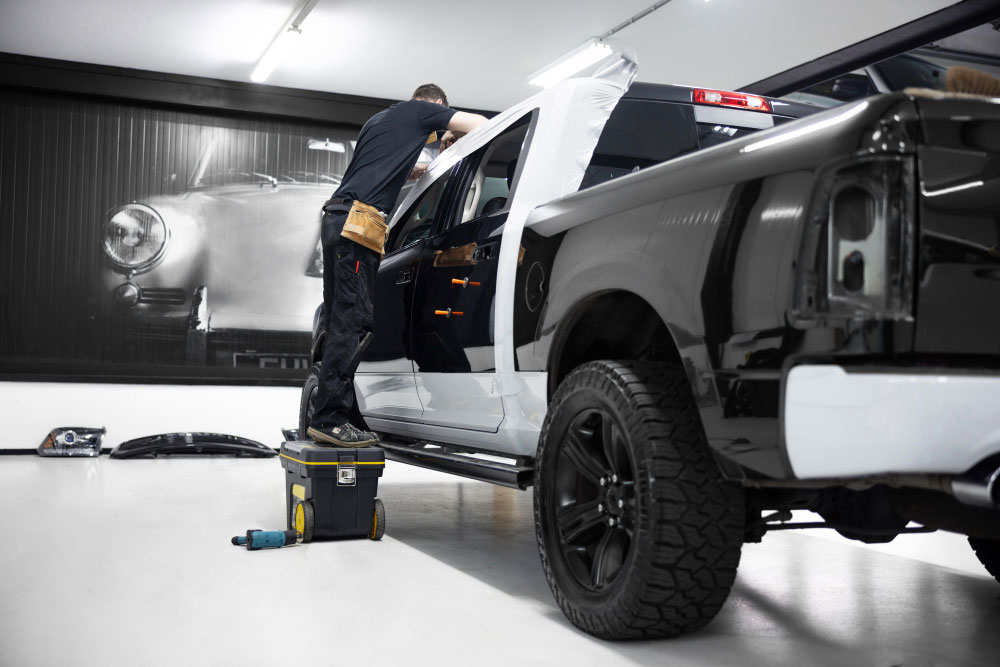
Are Hilux Doors and Body Panels Interchangeable?
When buying used Hilux car parts for body repairs, it is tempting to choose a door, guard or tailgate from a ute that looks the same as yours. Before committing, check the body configuration and the exact component. A matching model badge, paint colour or registration year is not enough to establish compatibility.
Hilux body parts are not universally interchangeable. The replacement needs to match the relevant generation, cab style, pickup or cab-chassis configuration and equipment. Even where a bare panel is suitable, attached wiring, locks, trim or lighting may require separate checks. Treat each component as an individual application rather than assuming an entire donor vehicle is a match.
Cab style and load body are two different details
Hilux ranges have included Single-Cab, Extra-Cab and Double-Cab bodies. They have also included pickup and cab-chassis versions. The cab describes the passenger compartment; pickup or cab-chassis describes the vehicle’s body configuration behind it.
This distinction matters when describing a replacement. A Double-Cab Hilux with a factory pickup tub is not the same body configuration as a Double-Cab fitted with a separate tray.
Start by identifying both. Include photographs showing the side of the vehicle and its rear body rather than sending only a close-up of the damaged part. That gives the supplier context before comparing individual components.
The same generation can include different front-end designs
A generation can receive a facelift without becoming an entirely new model. Those updates can change the parts around the front or rear of the vehicle.
For example, Toyota’s Australian 2020 Hilux update introduced revised styling and lighting within the eighth-generation range. The changes were not identical across every body and grade, which is why a broad year-range description needs checking against the actual vehicle.
Provide the build details and grade, such as WorkMate, SR or SR5, but do not treat those labels as a complete compatibility check. Ask the supplier to confirm the application of the specific replacement.
A door shell and a complete door are different purchases
Before comparing prices, establish what the repair requires. A door shell is the main body structure of the door, while a complete used door may be offered with additional items. Confirm the inclusions rather than assuming that everything in a photograph is supplied.
Ask about the glass, window regulator, lock, wiring, mirror and interior trim. Your repairer may be able to retain some original components, but their suitability for transfer should be confirmed first.
A door enquiry should therefore answer two questions: does the shell suit the vehicle, and do the included components match the equipment already fitted? Matching one does not automatically answer the other.
After accident damage, also have the repairer assess the surrounding opening and mounting areas. A replacement door cannot substitute for repairing damage to the vehicle around it.
Headlights and bumpers need equipment checks as well as shape checks
Grade differences can matter even when two Hilux vehicles are from the same production period.
In the Australian 2020 update, Toyota described halogen headlights for WorkMate and SR models and LED headlights for SR5, with different levelling arrangements. That is a specific example of why a similar-looking replacement should not be selected solely by its outline.
Confirm the lamp type and compare the identification details, connectors and mounting arrangement. For bumpers, ask the repairer to account for any parking sensors, brackets or other equipment fitted to your vehicle.
Buying a higher-grade component is not necessarily a direct replacement or an upgrade that can be completed by changing one part. Establish the complete requirements before ordering.
A pickup tailgate is not the same as a tray tailgate
A factory pickup tub and a separately fitted tray have different constructions. Describing both simply as a Hilux rear body leaves important information missing.
For a pickup tailgate, identify the vehicle and confirm which hardware and fittings are included. For a tray component, identify the tray manufacturer or supplier as well as the vehicle. The tray’s identification plate, original invoice and photographs may be more useful than the Toyota badge alone.
Toyota also offers tray and canopy accessories, so do not assume every load-carrying component on a Hilux came fitted as part of its original body.
For the same reason, check an existing canopy or tub accessory against the exact body being repaired. A replacement tub should not be selected on the assumption that all attached equipment will transfer unchanged.
Keep a replacement repair separate from a conversion
Replacing a damaged component with its confirmed equivalent is a different job from changing the vehicle to resemble another grade or model update.
A conversion can involve more than the visible panel. Ask the repairer whether additional fittings, electrical work or changes to connected equipment would be required. Do not start by buying a collection of panels and leave those questions until installation.
For a straightforward repair, the priority is a suitable replacement for the vehicle as it is. BIP lists doors, bumpers, panels and headlights within its Hilux range. You can check available Toyota Hilux doors, panels and exterior parts once the required component has been identified.
Ask for a component match rather than a general assurance
Provide the VIN and any readable part number, together with the cab style, body configuration and photographs. Then ask the supplier to confirm the particular item against those details.
Useful questions include:
- Does this component suit my build and body configuration?
- Which fittings are included, and which original items would need to be retained?
- Is this a direct replacement, or would other changes be required?
Keep that confirmation with the quote. A broad description such as “fits Hilux” is less useful than an answer about the actual vehicle and component.
Confirm the part before painting or fitting it
Arrange a final comparison before committing to refinishing and installation. Our guide to checking used Toyota parts before fitting them covers the physical inspection stage in more detail.
The aim is not to rule out every part from a different Hilux. It is to establish compatibility for the individual panel or assembly before spending money on the rest of the repair.
With your VIN, photographs and the required part details ready, get in touch with our parts team to check suitable options.













Leave A Comment