
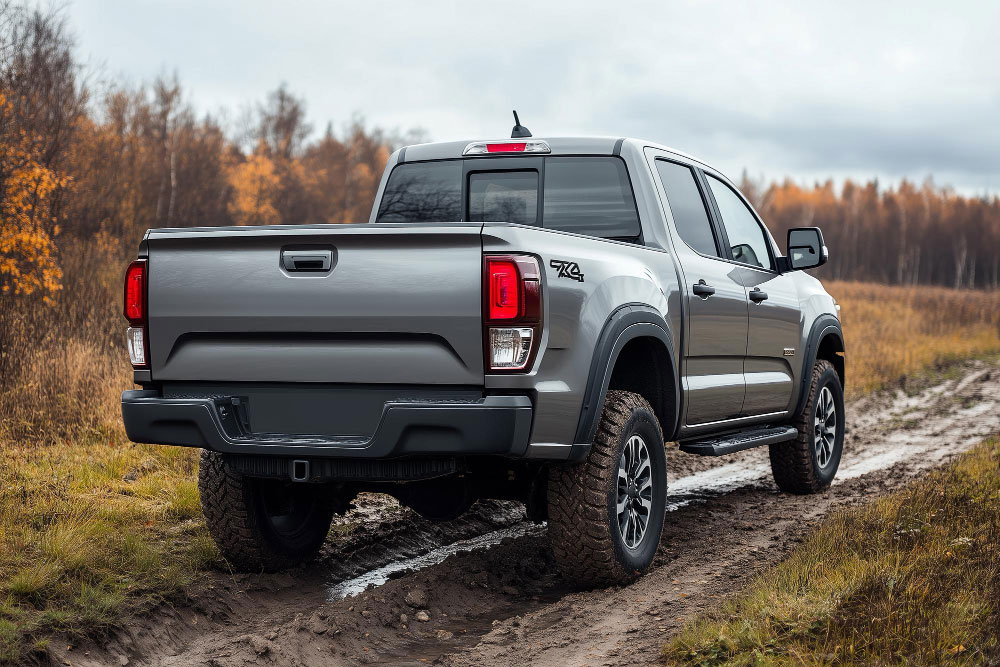
Can Hilux 4×4 Parts Be Used on a 4×2?
Before ordering Hilux spare parts in Melbourne, confirm whether your ute is a standard 4×2, a 4×2 Hi-Rider or a 4×4. Similar bodywork and ride height can make two vehicles look closely related, but that does not establish whether a particular replacement will fit.
Some Hilux components may be shared between versions, but 4×2 and 4×4 parts are not universally interchangeable. Each replacement needs to be checked against the vehicle’s build specification and the manufacturer’s parts information. The donor vehicle’s drivetrain is important, but it is only one part of that identification process.
Hi-Rider is not another name for four-wheel drive
Toyota’s Australian 2020 Hilux specifications distinguish standard 4×2 models, 4×2 Hi-Rider versions and 4×4 variants. The Hi-Rider sits within the two-wheel-drive range despite its raised stance.
That matters when a supplier asks whether your Hilux is a 4×2 or 4×4. Describing it as the tall model is not enough. Provide the actual configuration and have the VIN checked where the specification is uncertain.
Do not assume that a Hi-Rider uses every component from a standard-height 4×2, or that its resemblance to a 4×4 makes all four-wheel-drive parts suitable.
The drivetrain needs more than an engine-size match
In a conventional part-time four-wheel-drive Hilux, a transfer case directs drive through the four-wheel-drive system and provides high and low ranges. A rear-wheel-drive Hilux does not use that same arrangement.
This makes a description such as “Hilux automatic gearbox” incomplete. The transmission needs to suit the relevant engine and driveline application, including how it connects to the rest of the system.
Ask the repairer to identify the required transmission or assembly before comparing donor parts. Matching the engine capacity or number of gears alone does not establish that the complete unit is suitable.
A replacement enquiry should concern the component your vehicle actually needs, not an assumption that a 4×4 assembly is a stronger direct substitute.
Brake specifications show why the distinction matters
Toyota’s Australian 2020 specification table lists 296 mm front discs with floating callipers for standard 4×2 models, compared with 319 mm discs and opposed callipers for 4×4 and 4×2 Hi-Rider variants.
That is a specific example, not a universal fitment rule for every Hilux year. It shows why simply requesting brakes for a two-wheel-drive Hilux can leave important information missing.
Have the exact brake application checked before ordering. Similar specifications do not, by themselves, prove that every pad, rotor, calliper or associated fitting is interchangeable. A qualified repairer should select and install components according to the applicable manufacturer instructions.
A shared suspension layout does not identify the replacement
Two vehicles can use the same general suspension design without that description identifying the correct replacement spring or shock absorber. Toyota designs suspension components for particular vehicle applications, so the model specification remains important.
Ask the supplier to check the actual component application rather than choosing a spring or shock because it looks similar to the original.
Also mention previous modifications. If the Hilux has been lifted or fitted with an aftermarket suspension package, provide the brand, component numbers and installation records where available. The VIN identifies the vehicle, but the repairer also needs to know what is currently fitted.
Check electrical and engine accessories individually
The same approach applies to an alternator, starter motor or another engine-related component. Do not reject a possible replacement solely because it came from a different drivetrain version, but do not accept it solely because both vehicles have the same engine badge.
Have the supplier compare the part number and application with your engine, build details and relevant vehicle equipment. Photographs of the existing label, connectors and mounting points can support that check.
The useful answer is that this particular component suits your Hilux, not that parts from all Hilux models of a similar age should work.
A listing that mentions both versions still needs checking
A component advertised for 4×2 and 4×4 vehicles may have a valid shared application. Read the complete fitment description rather than treating the headline as confirmation.
Ask whether the listing applies to your build period, body configuration, engine and equipment. Any exclusions or additional conditions should be resolved before purchase.
The aim is not to make parts sourcing unnecessarily restrictive. It is to distinguish a properly confirmed shared component from one being offered on the basis of a broad model description.
Give the supplier a vehicle-specific request
Keep the enquiry focused on the identified part. A useful request includes:
- The VIN, build details and whether the vehicle is a standard 4×2, 4×2 Hi-Rider or 4×4.
- The required component, its position and any readable part number or workshop identification.
- Relevant engine, transmission or modification details, with photographs where available.
Ask whether the proposed item is a direct replacement for that specification and exactly what the supplied assembly includes. Do not assume a component requiring additional changes is equivalent to a like-for-like replacement.
BIP’s Hilux range covers used components for 4×2 and 4×4 variants, including engines, transmissions, suspension, body and electrical parts. You can check used Toyota Hilux parts for your drivetrain and model and confirm current availability before ordering.
Compatibility and condition are separate decisions
Confirming that a used component fits does not establish that its condition is suitable. Ask what inspection information is available and have the repairer assess whether reuse makes sense for the particular job.
Consider installation labour as well. A major assembly requires a different level of checking from a simple trim component, particularly where removing it again would involve substantial workshop time.
For braking, steering, suspension and drivetrain repairs, appropriate professional assessment should take priority over finding the lowest-priced donor part.
Choose a confirmed replacement rather than a presumed upgrade
A part from a 4×4 Hilux is not automatically an upgrade for a 4×2, and a part from a two-wheel-drive donor is not automatically unsuitable for every four-wheel-drive model. The answer comes from the individual application.
Identify the vehicle, confirm the required component and check the proposed replacement before fitting. That is more useful than relying on ride height, a model badge or a general claim that all Hilux parts are the same.
With your VIN and the required part details ready, ask our team about availability so we can check the component you need.













Leave A Comment