
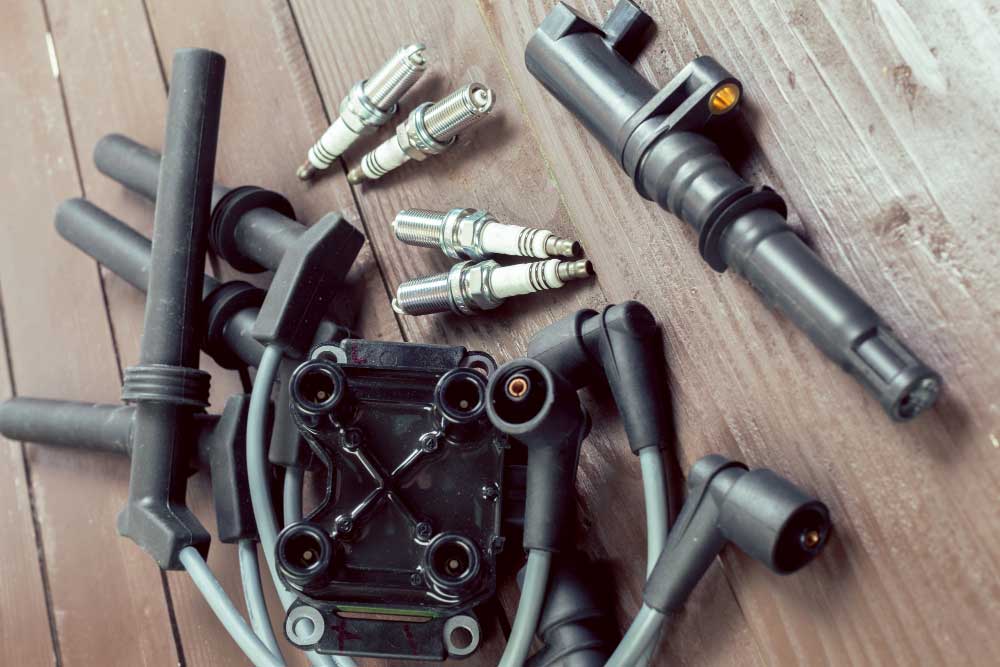
Ordering a replacement Toyota part can look straightforward until two components that appear almost identical turn out to have different plugs, brackets, dimensions or specifications. That is when a simple repair becomes a second order, another workshop visit and an increasingly personal disagreement with your car.
A little preparation before buying can prevent many of these problems. The model name alone is often not enough. Build details, part condition and the exact component being replaced all matter, particularly when buying second-hand parts.
BIP Auto Spares supplies used Toyota components for models including Corolla, RAV4, Hilux and HiAce, with categories ranging from steering and suspension to engine components, brakes, electrical systems, body panels and interior fittings.
Here are six details worth checking before ordering a replacement.
1. Start with the exact model and build year
“Toyota Hilux” or “Toyota Corolla” narrows things down, but it does not always identify the exact component required.
Manufacturers update vehicles throughout a model’s production life. Different generations, variants and production periods can use different components even when the vehicle name stays the same. Toyota itself notes that genuine parts are designed around individual vehicle ranges rather than being treated as universally interchangeable.
Write down the full model, year and variant before contacting a supplier. If you know the engine and transmission details, include those as well.
That information gives the parts supplier a much better starting point than “I need a mirror for a Toyota”, which is technically information but not terribly useful information.
2. Have the VIN ready
The Vehicle Identification Number is one of the most useful pieces of information you can provide when identifying a vehicle accurately.
Toyota Australia confirms that a Toyota VIN is unique to the vehicle and can be found on the vehicle body or documentation such as the registration certificate.
Having the VIN available can help clarify which vehicle specification you have when there are multiple variants within the same model range.
If you are ordering Toyota spare parts in Melbourne, sending accurate vehicle information from the beginning can make the parts-matching process much more efficient.
3. Check the existing part number where possible
Before throwing the damaged component away, inspect it for a label, stamp or identification number.
Part numbers can be especially useful when dealing with electrical components, mechanical assemblies and parts that changed during a model’s production cycle. Photograph the number rather than trying to remember it. Human memory is a fascinating system, but it becomes remarkably creative the moment someone asks, “Was that an 8 or a 3?”
Take several photos of the existing component as well. Include the front, rear, mounting points, connectors and any labels.
The supplier can then compare those details against available stock instead of relying entirely on a verbal description.
4. Do not judge a used part by appearance alone
A used panel, light or mirror may be relatively easy to inspect visually. Other components require more consideration.
Check exterior items for broken mounts, cracks, corrosion, dents, damaged clips and previous repairs. Interior components should be checked for wear, switches, connectors and mounting points. Mechanical components require greater attention to their condition and suitability for the intended vehicle.
BIP states that its second-hand Toyota components are checked and tested before being offered for sale, and that its wrecking operation allows reusable parts to be recovered from Toyota vehicles rather than automatically discarded.
That distinction matters. “Used” tells you the part has had a previous life. It does not, by itself, tell you whether that life was peaceful.
5. Know whether the repair actually suits a second-hand part
Not every component should be approached in exactly the same way.
Body panels, mirrors, lights, interior trim and many larger assemblies may make good candidates for used replacement when their condition and compatibility have been properly assessed. Components connected with braking, suspension, drivetrain and other safety-critical systems deserve more careful consideration and proper installation.
Toyota Australia describes brakes and suspension as components that directly affect vehicle behaviour and stopping performance, while engine and drivetrain components are designed around individual Toyota models.
This does not mean a second-hand component is automatically unsuitable. It means price should never replace proper assessment.
BIP’s used Toyota spare parts in Melbourne inventory includes mechanical, electrical, exterior and interior components, and the business also provides fitting and servicing.
6. Ask what happens if the exact part is not in stock
Availability matters, particularly with older vehicles.
A useful parts supplier should be able to tell you whether the component is currently available and what alternatives exist if it is not. BIP states that it uses an inventory system for its Toyota parts and can source components or suggest alternatives when a requested item is unavailable. Its warehouse and wrecking operation also support a broad inventory of second-hand components.
This is useful when dealing with less common variants or components that may no longer be easy to find through standard retail channels.
Rather than buying something that looks “close enough”, it is usually better to wait for the correct match. Cars tend to have surprisingly strong opinions about improvisation.
Prepare the details before contacting the supplier
The easiest way to make a Toyota parts enquiry more productive is to arrive with useful information.
Have your model, build year, VIN and photos ready. Include the existing part number where available, explain what needs replacing and mention any important features associated with the component.
That preparation allows the conversation to focus on finding the right option rather than identifying the vehicle from scratch.
Buying Toyota spare parts should solve a repair problem, not introduce a new one. Correct identification, sensible condition checks and proper fitment matter more than simply finding the lowest advertised price.
If you need help confirming a component or checking current stock, send your Toyota details to the BIP Auto Spares team. BIP is located at 61 Westwood Drive, Ravenhall, Deer Park.













Leave A Comment